

With the 2025-2026 AP season finally behind us, it’s time to begin thinking about the next academic year and the new challenges it brings. However, as students (particularly rising juniors) begin to pick their classes for the upcoming year, many are faced with an important dilemma: how many AP classes should they take?
In recent years it seems as though the movement towards taking more and more AP courses has only increased. Students, hoping to portray themselves as worthy academic college applicants, pile on APs in an effort to reconcile with college acceptance rates that only seem to get lower by the year. However, as an increasing number of students opt to take APs instead of standard courses, the question remains: can and should every student be taking a high number of APs?
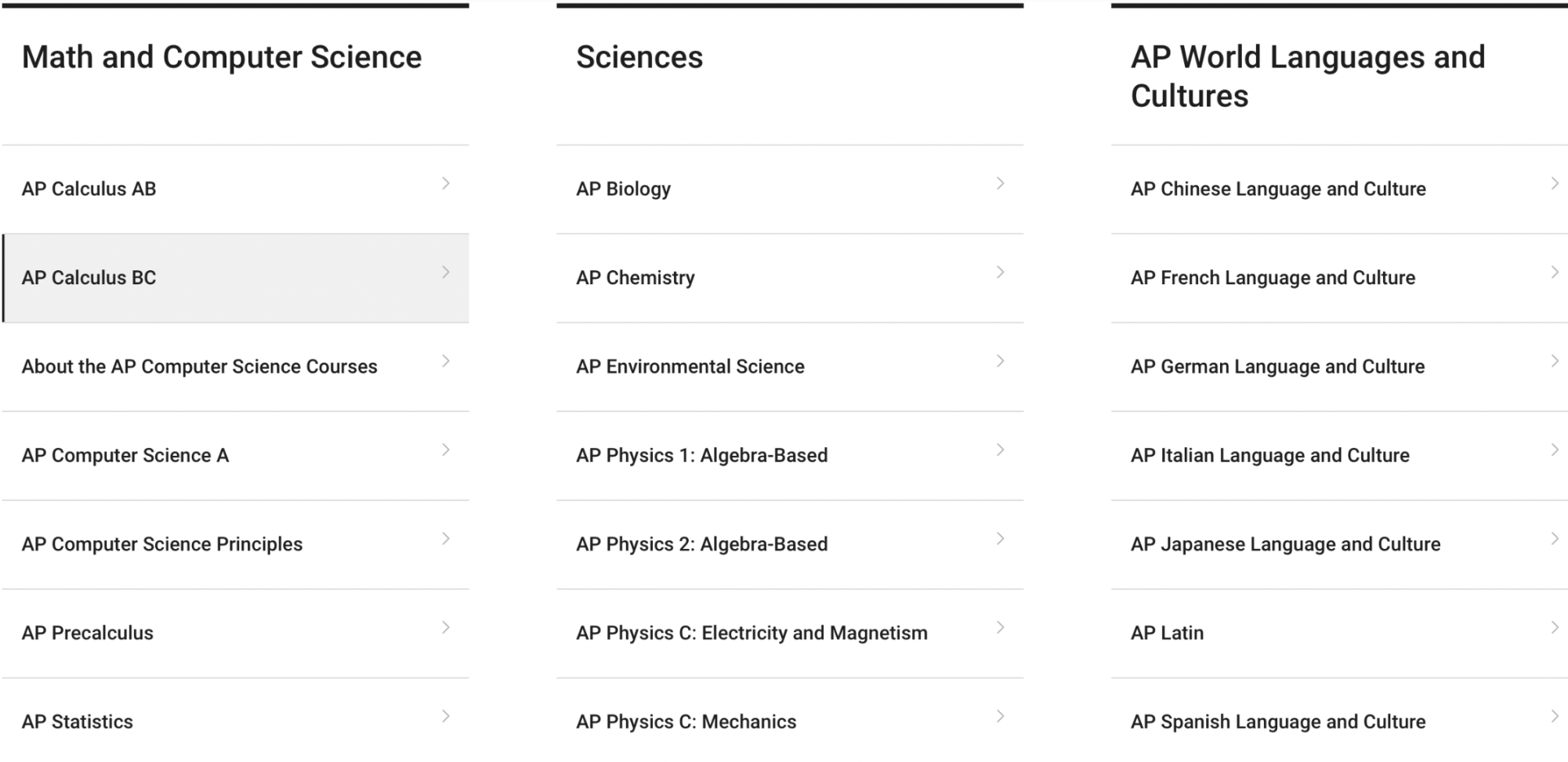
Although some students are motivated by the edge that APs may offer them in admissions, others opt to take a large number of APs simply because they are fascinated by the topic areas and are ready for a challenge. Zoe Prins (’28) plans to take four AP classes: AP English Literature, AP Psychology, APUSH (AP U.S. History) and AP Physics 1. She describes an interest in all of these subjects and feels as though she might as well “try them at a higher level.” She noted that while she “might get burnt out at some point,” she is hopeful that by carefully managing her schedule, she will “be able to balance them.”
Despite this optimism, many still worry that they will wither under the pressure. Olivia Perez (’28) plans to take APUSH, AP English Language and AP Physics 1, noting that “a lot of other people in our grade are taking them.” However, Perez understands that “APUSH is going to be really difficult, along with AP Physics.” Similarly, Sasha Grossman (’28), plans to take two AP classes junior year because she feels that she “needs them to get into college.” While she fears being burnt out at the end of the year, she knows the hard work will be worth it.
Like Prins, Perez, and Grossman, Isabella Cavalli (’27) took AP Physics, AP U.S History, and AP English Language her junior year. She felt that “it was overwhelming at the beginning of the year,” but now that the year is wrapping up, she can say that “if you can use your time well and stay focused and productive,” taking three APs is very manageable.
While taking a large number of APs is by no means impossible for the right student, Chris Gilder (’26) noted that not every AP is necessary for every student. He described his experience with AP English Language, noting that the workload was “so hard, I ended up dropping it.” Now that he is going off to college, he recommends that students only take the APs they are “actually interested in” so that “the work is more interesting,” and so you will be motivated to study for classes you enjoy.
So what can we conclude from this? It is clear that high school students are feeling the pressure to take AP classes more than ever. However, they should consider many factors before picking their courses for junior year. While the AP experience is unique to each student, students should consult their guidance counselors in order to ensure that their schedule reflects their interests and that their workload is suitable for their individual needs.
In other words, there is no single answer to what number of AP courses is manageable. Students should give themselves time to get accustomed to the workload, stick to the AP classes they are genuinely interested in, and spend their time working productively. However, it is equally important to note that students should not feel pressured to take classes they have little interest in merely because that seems to be the growing norm. It is crucial that each student evaluates their course load based on their own goals and limitations, not the expectations of others.