
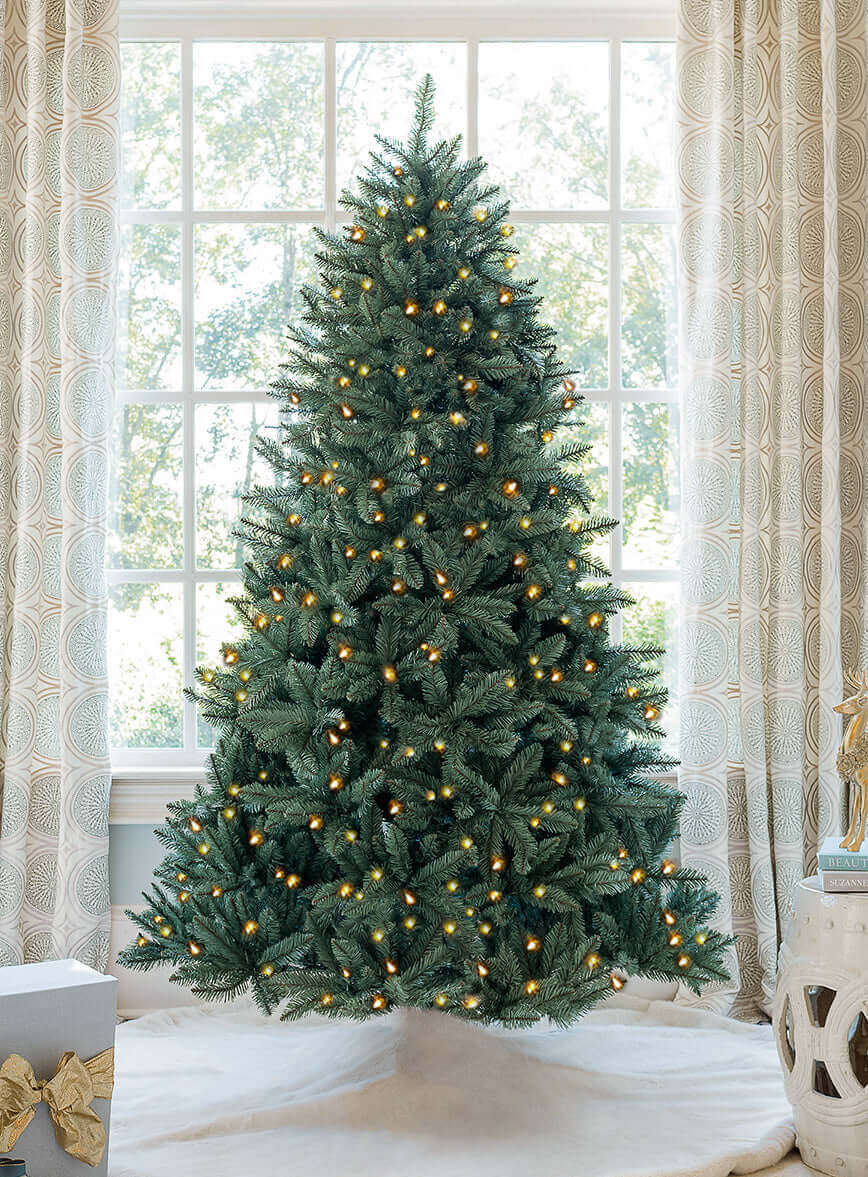
If one choice creates less waste, supports local farmers, smells better, and looks more authentic, why do millions of people still buy plastic Christmas trees each year? The answer has more to do with convenience than quality, and understanding the difference matters. As the stress of the environmental impact of holiday habits gets to everyone, the ongoing debate of whether to buy a real Christmas tree or a fake Christmas tree shows a clear winning side. Real Christmas trees simply provide several advantages that extend far beyond living room decor.
With a wide variety of plant nurseries and Christmas tree farms in our community, local economies rely on the Christmas season for income and holiday tips that aren’t provided any other time of year. Yet, even with this, only 19 percent of the 96 million Christmas trees displayed every year are real according to “The Hustle.”
Students feel that real Christmas trees are essential to a well-rounded holiday as well. Vera Chow (’29) says that “Real Christmas trees tend to feel more festive, not just because of the smell, but because of the family tradition of choosing the perfect one.” She also stresses that “these trees create memories of time spent with family, and since Christmas is a time to make moments that last a lifetime, these memories are very valuable.” To students full of midterm stress with jam-packed schedules, a simple, cheerful moment like picking a tree can be more beneficial than we could ever imagine.
The convenience of a plastic tree is tempting, but hidden risks and their carbon footprint might weigh down the enticement of those perfectly molded branches. Plastic trees are made from PVC, a non-recyclable plastic that releases harmful chemicals during production and ends up sitting in landfills for centuries. Because most are manufactured overseas, the shipping and factory emissions give them a much larger carbon footprint than real trees, and fake trees that have spent months in boxes in basements or attics collect mold spores and allergens that get released when you put them up.
In an increasingly artificial world, real Christmas trees remain a meaningful tradition, offering families a chance to slow down and create lasting memories together—something especially precious as the stress of midterm season approaches. Beyond their symbolic value, real trees support local farms and provide sensory experiences that artificial trees cannot replicate. Choosing a real tree, then, is not just a nod to tradition; it is a way for students and families alike to invest in authentic experiences, support their local economy, and bring the warmth of the season into their homes in a way that a plastic tree simply cannot match.