

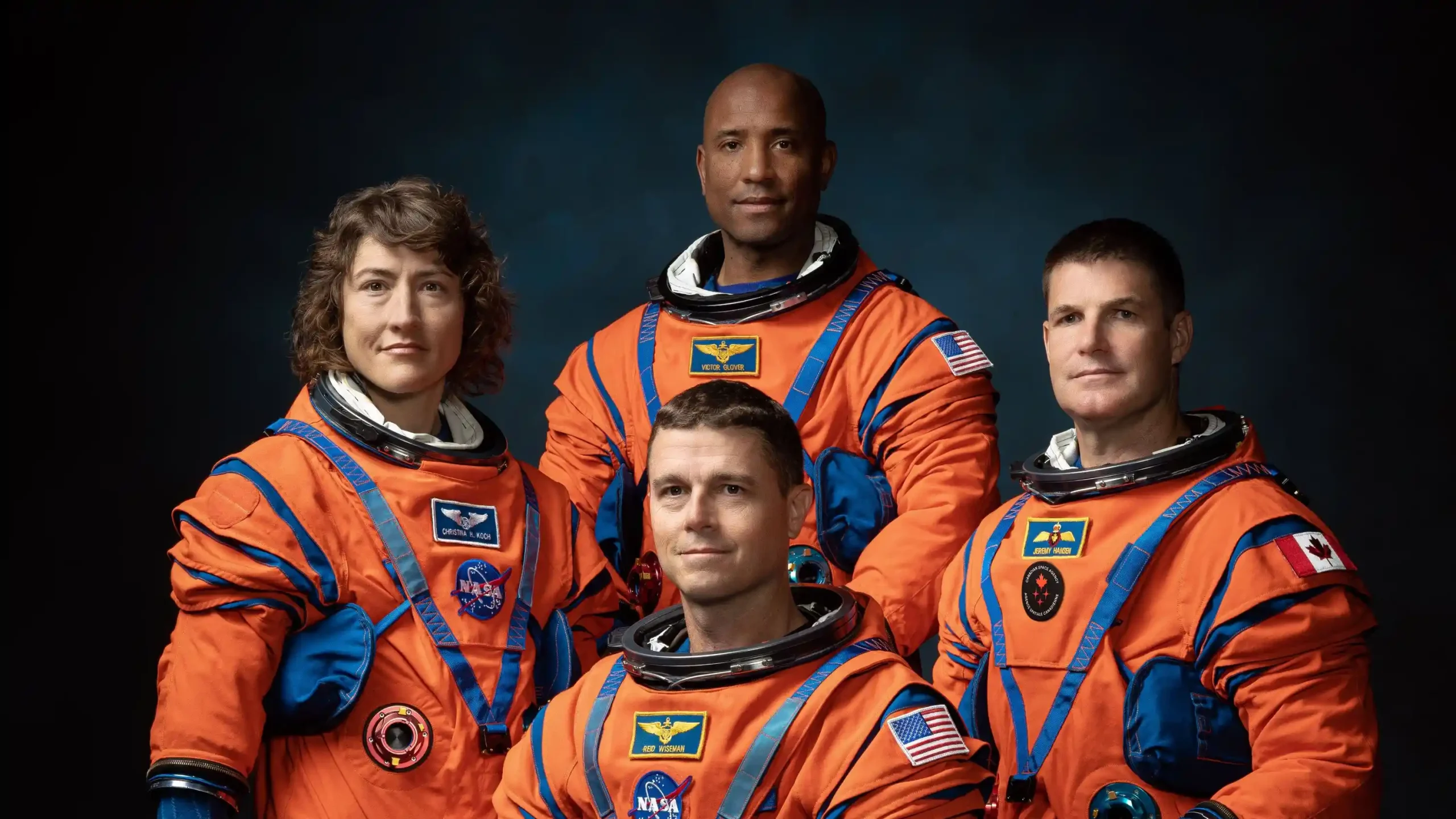
On April 10th, 2026, NASA’s Artemis II spacecraft carried astronauts around the moon for the first time in over five decades. Since the last NASA mission, Apollo 17 in 1972, space travel had been on a hiatus, making it all the more exciting when Artemis II astronauts travelled deeper into space than ever before. This milestone not only marked a return to space exploration, but it has also ushered in a new era of fascination with the universe beyond Earth back home.
As news about this remarkable mission spread across all media platforms, students were able to stay updated in a different way than past generations were able to. Instead of listening to the radio or watching live broadcasts on TV (as many audiences had to do during the first space missions) students were able to interact with the mission through social media. Throughout the mission, a short TikTok or funny Instagram post was what kept students up to date. When asked about her digital experience with the mission, Georgia Wordham (’28) explained, “It was mostly just entertainment at first, but I gradually became interested after a while. Eventually I decided to look up the mission and started to actually understand what it was about.” Perspectives like Wordham’s highlight a major shift in how modern society experiences major scientific events. It also reflects on how social media can act as both a source of entertainment as well as a gateway to curiosity and discovery.
From a scientific perspective, Artemis II shows just how much space travel has advanced since earlier space missions. Compared to the Apollo missions, this spacecraft was not only larger, but also relied on advanced solar power rather than fuel cells, allowing for the mission to last longer. These improvements not only made sure that the astronauts had the safest experience possible, but also helped NASA and other space travel agencies prepare for future space exploration. Chemistry and AP Environment teacher Sophia Andrews echoed this sentiment, noting, “I think any time we are able to go beyond your backyard, whether it’s a different state or planet, it reminds us how wondrous and amazing the universe is.”
Overall, Artemis II represents more than just a return to space; it reflects on how scientific discoveries and modern-day culture can overlap in ways that make major missions more accessible for students than they were in the past. Whether it is just a quick glance at a funny meme, or a full deep dive into science behind space exploration, this mission has helped to shape how our generation views space travel.