

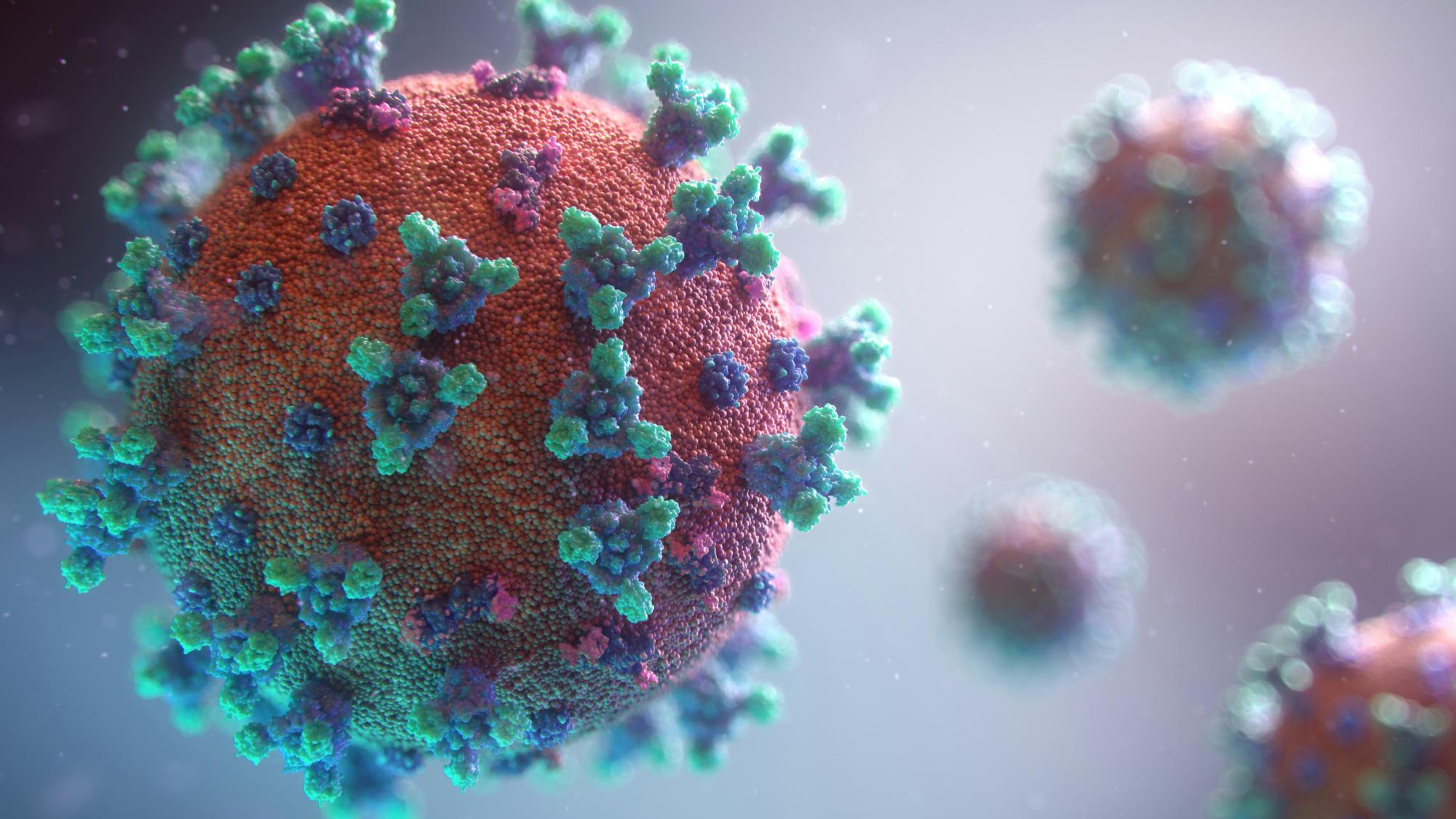
The Class of 2026 is now graduating, but six years ago, when they were just starting middle school, they were hit with a worldwide pandemic that led to a global lockdown. Classes moved to Zoom, and instead of shuffling from one building to another in the usual middle school fashion, sixth graders were navigating their courses via computer. Darlena Riquelme (’26) said, “I felt like I lost my social skills. It really drained me, being face-to-face with a computer for hours.”
When they reached seventh grade, students began returning to in-person classes, with the school day divided into morning and afternoon pods. “I remember there was a blue cohort and a green cohort,” Carla Carvajal-Vargas (’26) recalled. “The blue cohort went to school in person in the morning and then went home. Meanwhile, the green cohort did online learning in the morning and then returned to school in the afternoon.” Eventually, everyone was back to full-time, in-person learning.
Middle school was a fundamentally different experience for the Class of 2026. For some, the disruption made those years harder. For Carvajal though, it had the opposite effect. “It actually made it better because my friends and I had gained such a huge connection around that time,” she said.
When they arrived at MHS, everything changed. The building was bigger, the environment different, and the academic expectations higher. Socially, dynamics shifted. New friends came and others left. This was a typical transition from middle to high school, but COVID restrictions were still present. As freshmen, members of the Class of 2026 had to socially distance and wear masks, restrictions that gradually disappeared over the following years.
The transition to high school is typically a challenge on its own. For this class, it came with an added layer. Riquelme said the hardest stretch was moving from eighth to ninth grade. “So many people around me changed. Everyone was transitioning into a whole new school and I felt very overwhelmed and anxious, but with support from staff, friends, and family, I was able to push through.”
For Carvajal-Vargas, the sense of normalcy returned gradually. “When I entered high school, we were still in the phase of the masks, but ever since COVID was no longer a global pandemic, everything felt normal again,” she said. “Now that I will be graduating, I will say all of this went by pretty quickly.”
The question of if COVID negatively impacted the Class of 2026 is answered not on a whole consensus basis, but rather through the impact it has had on each individual’s experience, and how this has led the Class of 2026 to come together as a class of resilience and perseverance.