


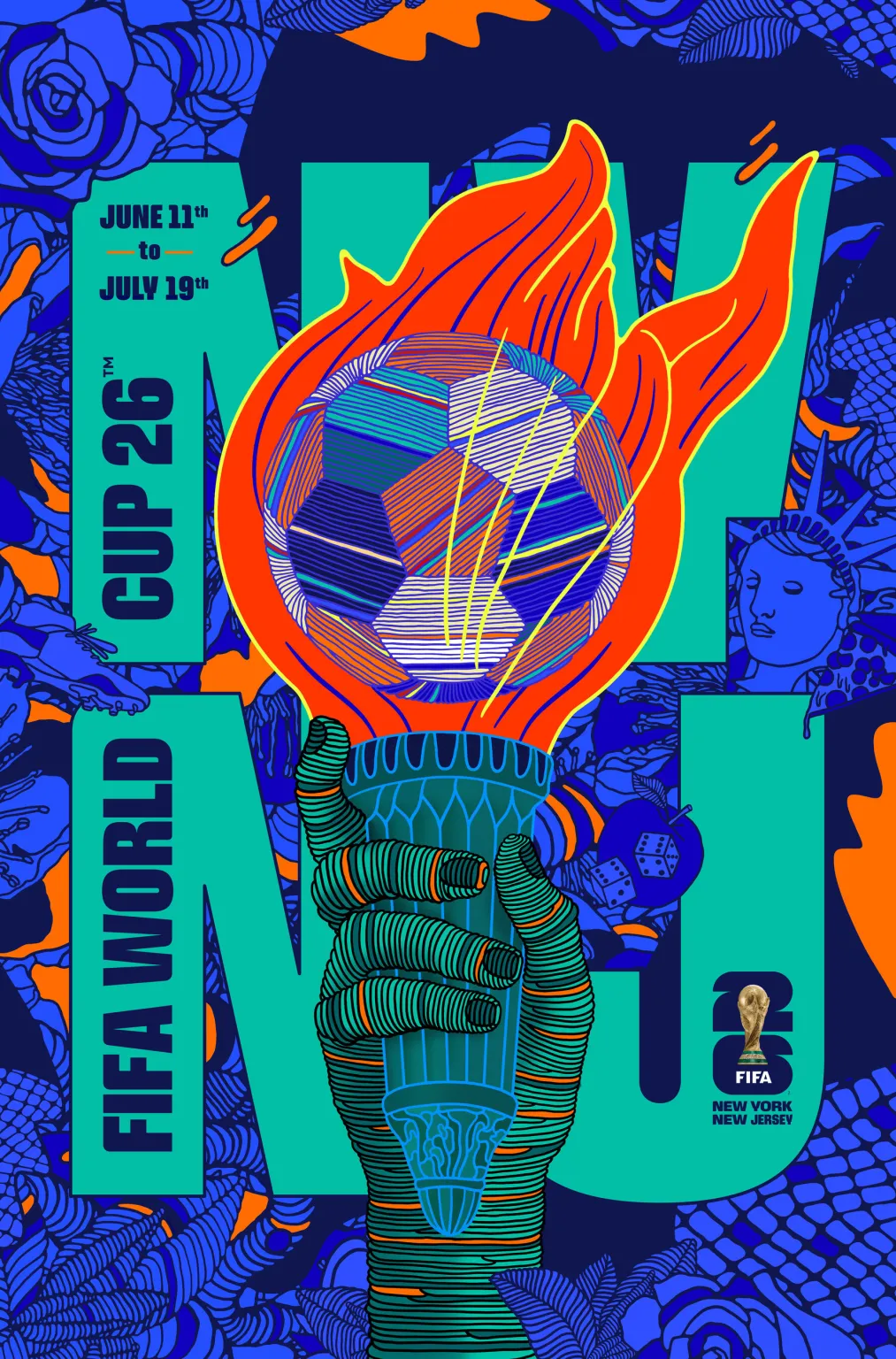
This summer, the FIFA World Cup is coming to New York for the first time in 32 years. The city will host eight matches of the 2026 tournament starting June 11, including the final on July 19 at MetLife Stadium in New Jersey. Over 1.2 million visitors are expected to travel to the region, bringing with them an estimated $3.3 billion in economic activity. For New York, it marks one of the biggest sporting events in recent history.
The 2026 FIFA World Cup is the largest edition of the tournament ever, featuring 48 teams across the United States, Canada, and Mexico, with 104 matches in total. New York/New Jersey is one of 16 host regions, but plays a larger role than most. The region will host eight matches, one of the highest totals of any host city, and was selected to stage the final, the single most-watched sporting event on the planet.
The economic impact is staggering: $3.3 billion in projected economic activity and over 26,000 jobs supported across the region. However, city leaders are making a deliberate push to make sure that money reaches more than just big hotels and corporations. The New York and New Jersey Host Committee launched the Welcome World Rewards Program, an initiative designed to connect millions of visiting fans directly with local small businesses. The program rewards fans for exploring neighborhoods and spending money at these local businesses. City leaders emphasize that the economic windfall from the World Cup should be felt on every block, not just around the stadium.
Beyond the economic boost, the World Cup presents a significant opportunity to expand soccer in America. “Americans will start watching more soccer, especially because the U.S. is playing,” said Leo Robine (’28). MHS Global teacher Mr. Basso echoed that sentiment, saying, “We saw the impact of the 2022 tournament. Now Americans can watch the highest level of the game in their own country.” Basso believes the tournament will likely have a ripple effect extending beyond the event itself, claiming that it will “greatly help make soccer larger in America” and “may also increase attention for MLS club teams.”
However, the World Cup has also raised concerns among fans and New Yorkers. Considering New York City is a host city, one major concern is the fact that the games will not even be played there, despite it being one of the most populated and richest cities in the world. Instead, they will be played across the Hudson River in East Rutherford, New Jersey, at MetLife Stadium. “Many people around the world do not know that MetLife isn’t in NY,” Basso argues. This could create a lot of confusion and anger among international fans unfamiliar with the area. Basso adds that MetLife Stadium “isn’t really close to New York City and it is very hard to get from NYC to MetLife as the area of New Jersey can easily become congested with traffic.”
While travel to the venue may be difficult for some fans, most will not have the chance to get there. Tickets for many matches are priced in the thousands, and attending the final will cost at least $10,000 per seat. These prices have made attending the event impossible for most fans from around the world. Robine argues that “The World Cup should be attended by the whole world; however, the tickets are so expensive that it isn’t attainable for most.”
When the world descends on New York this June, the city will have a chance to show what it is made of. From the economic boost to small businesses to the growth of soccer in America, the stakes extend well beyond the pitch. All eyes are on New York.